Mike Wright
Artist’s Statement –
My earliest memory of seeing modern art was in a weekly children’s magazine called ‘Look & Learn’. In amongst articles that covered a wide range of subjects from history and literature to science and technology there would, each week, be a focus on the work of a particular artist. I can clearly recall pages describing works by Picasso, Modigliani and Henry Moore amongst others. These articles marked the beginning of a lifelong preoccupation and passion for modern art. Seeing these reproductions of the work of contemporary artists was very exciting, rather perplexing and like nothing I’d ever encountered.
Another article from the magazine that also etched itself on my memory described the discoveries made in the caves at Lascaux in southwestern France. Naturalistic and semi-naturalistic images, symbolic and seemingly abstract signs painted onto the walls of the caves about 22,000 years ago. We can only speculate about the meanings of these paintings except to say that they must have held a particular significance for the individuals and society that created them.
Many millennia have slipped by between then and now. Ways of human life have been transformed to a degree unimaginable to our distant forebears yet here we are still making pictures. Sometimes contemporary works can be relatively straightforward to relate to and understand. On other occasions they are as impenetrable as if they had been crafted thousands of years ago or originated on another planet. This need to create visual images whether naturalistic, abstract, minimalist or conceptual seems to be deeply ingrained in our DNA.
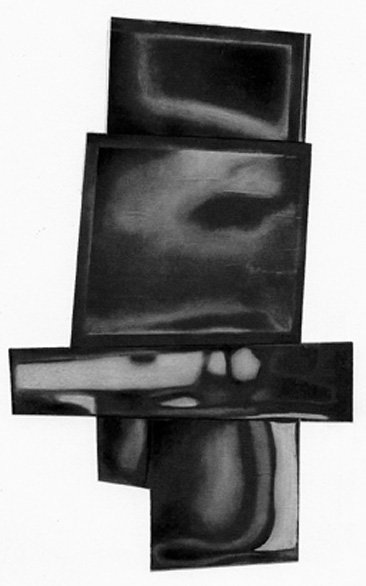
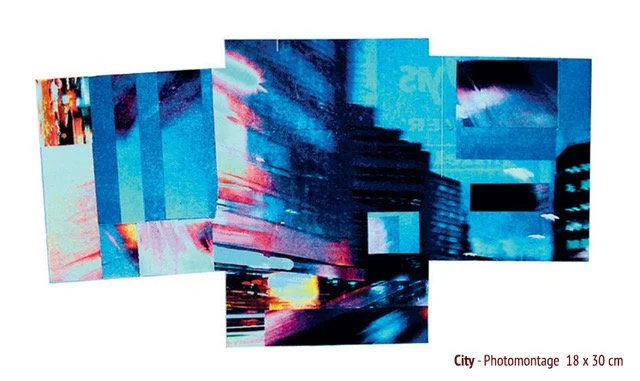
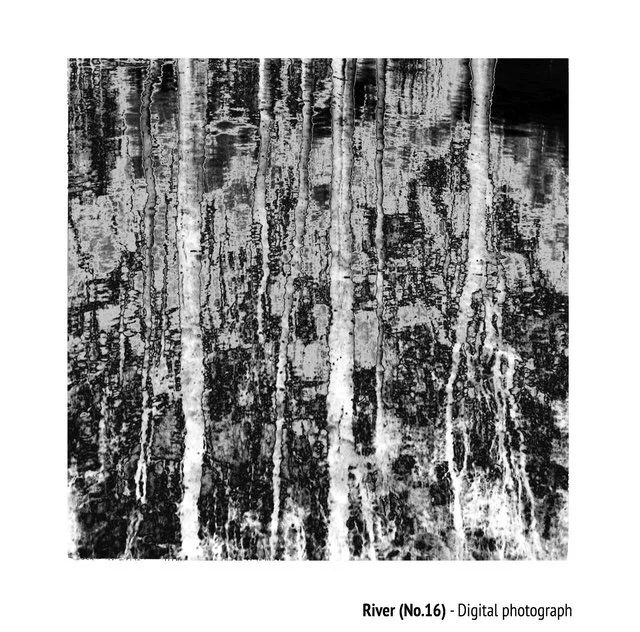
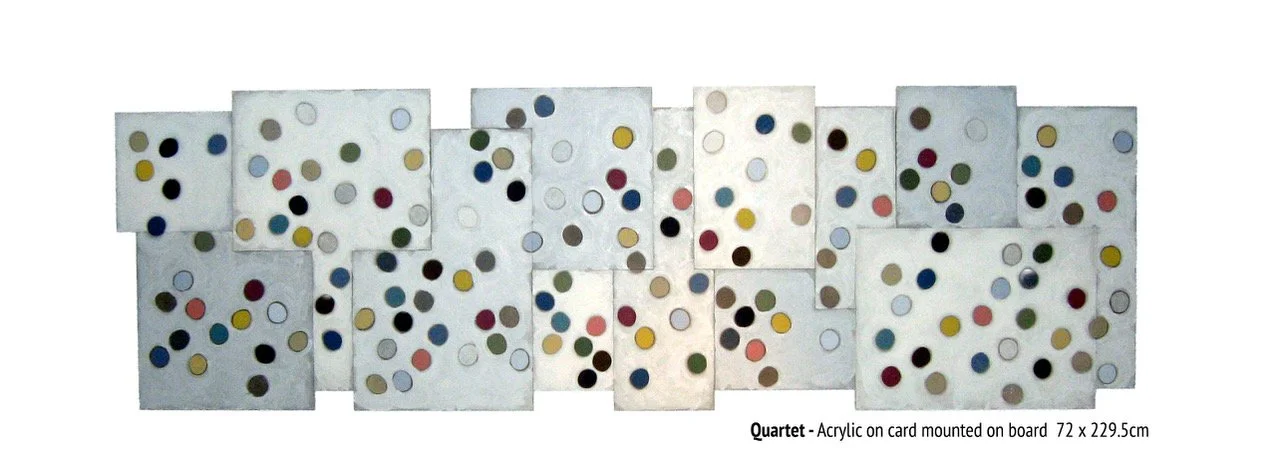
My own activity of creating images is in many ways little different from that of my Palaeolithic ancestors. It arises out of a personal response to my physical, psychological and social environment. Sometimes I think that I understand what I have created, why I have created it and what it relates to. On other occasions less so or not at all. A piece of work invariably has its own imperative and dynamic whether I fully understand it or not.
In a world dominated by the written and spoken word visual images offer an alternative experience, a different language rather like music, sometimes quiet, timeless, meditative at other times frenetic, challenging or disturbing. For me the experience of making a piece of work or looking at the work of others is intensely private, momentarily shutting out the rest of the world and, hopefully, experiencing a sense of dialogue with the work itself (and also its creator) that makes me think about, and possibly reassess, my notion of the visual status quo. I suppose that’s why I keep doing it.